


Understanding Lock Mechanisms: How Do Locks Work?
Learn what a lock does, how common door-lock parts work together, and how simple maintenance can help you spot wear before it becomes a lockout.

A door lock controls access by keeping a latch or bolt in place until an authorized key, code, credential, or interior turn is recognized. If you have searched for “what is a lock,” “how do locks work,” or “how does a door lock work,” the useful starting point is the relationship between the lock cylinder, the door hardware, and the frame.
What is a lock?
A lock is a mechanical or electronic device that controls the movement of a door, cabinet, vehicle, safe, or other access point. A traditional door lock uses a key or interior control. A smart lock may use a code, application, access card, or another credential. The design differs, but the purpose is the same: allow authorized operation while keeping the latch or bolt engaged for everyone else.
Door lock anatomy
Names vary by lock design, but these parts appear often in residential and commercial door hardware:
- Keyway: The opening shaped to accept the correct key blank. Electronic locks may replace this part with a keypad, reader, or other credential interface.
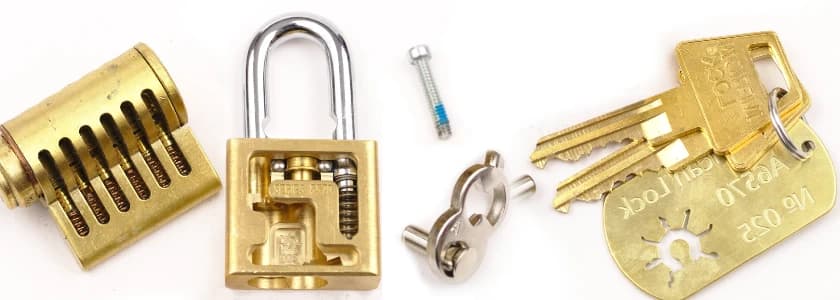
- Cylinder or plug: The portion that receives the key and transfers an authorized turn to the lock body.
- Key pins, driver pins, and springs: Components found in many pin-tumbler cylinders. Their positions respond to the correct key so the cylinder can rotate. Their job can be understood without taking the lock apart.
- Cam or tailpiece: A connecting part that transfers cylinder movement to the latch or bolt assembly.
- Latch: The spring-loaded piece that holds a closed door in the strike plate and retracts when the handle is operated.
- Deadbolt: A more substantial bolt that extends into the strike area and does not move just because the door is pushed.
- Strike plate: The plate attached to the frame that receives the latch or bolt.
- Lock body and trim: The case and visible hardware that hold the mechanism and connect it to the door.
How does a door lock work at a high level?
In a keyed pin-tumbler lock, the correct key places the internal components in the alignment position designed for that cylinder. The cylinder can then rotate the cam or tailpiece, which moves the latch or bolt. If the key, code, or credential is not accepted, the lock keeps the bolt or latch engaged.
Other designs use different internal parts. Lever locks use shaped levers, wafer locks use flat spring-loaded wafers, and electronic locks use a motor or clutch controlled by an access decision. The outside appearance can be similar even when the internal mechanism is different.
Common door lock types
- Pin-tumbler cylinders: Common in residential and commercial keyed locks. The key shape and internal component positions must match the cylinder.
- Wafer locks: Use flat wafers rather than the pin arrangement found in a pin-tumbler cylinder. They appear in some cabinets, vehicles, and door hardware.
- Lever locks: Use levers inside the lock case and are common in certain commercial and institutional applications.
- Deadbolts and mortise locks: Use a bolt or a deeper lock body to support the door’s security hardware. The correct choice depends on the door, frame, use, and installation.
- Smart and keyless locks: Use a keypad, app, card, biometric reader, or another credential. They still depend on sound door alignment and a reliable power or backup plan.
Lock maintenance and early signs of wear
A lock that becomes stiff, loose, noisy, or inconsistent deserves attention. Common causes include a worn key, loose mounting screws, a door that has shifted, a misaligned strike plate, debris, moisture, or ordinary wear. The symptom alone does not identify the exact cause.
- With the door open, check that the latch and bolt move smoothly without forcing the handle or key.
- Inspect visible screws, trim, the strike plate, and the door edge for looseness or damage.
- Keep the key clean and replace a bent or badly worn copy instead of continuing to use it.
- Use only the lubricant and maintenance method approved for the lock by its manufacturer. Do not pour unapproved household products into the cylinder.
- If the key will not turn, stops partway, or no longer controls the latch, stop applying pressure and arrange a professional inspection.
When should a locksmith inspect a lock?
Professional advice is useful after a key is lost, after moving into a property, when a lock shows wear, after damage to the door or frame, or when the hardware no longer matches the way the property is used. A locksmith can identify the lock type, check alignment, explain repair or replacement options, and confirm that the new hardware fits the door.
Ask for a clear description of the proposed work and a written estimate before approving service. During an access problem, the technician may also request identification, a lease, or another form of owner or occupant verification. That step protects the property while the lock is being serviced.
If a lockout is the immediate concern, read our safe lockout guide. For installation, repair, or maintenance questions, contact Okey Locksmith through the site.
Frequently Asked Questions
A lock is a mechanical or electronic device that controls access by keeping a latch or bolt engaged until an authorized key, code, credential, or interior control is accepted.
A key, code, or credential allows the lock’s internal mechanism to move the latch or bolt. If the input is not accepted, the lock keeps the access point secured.
Stop applying pressure, check for visible looseness or door alignment issues, and arrange a professional inspection if the problem continues. Use only maintenance products approved for that lock.